Every Thai menu has two halves. One is curries and soups, simmered and spooned. The other is the wok line, where dishes are cooked in minutes over serious heat and arrive still crackling. Drunken noodles, pad kee mao, is the star of that half, and Thai basil dishes are its family. For diners in Albemarle who have been working through the curry page at Thai Spice, the stir-fries are the next territory, and they play by different rules.
The rules are about heat, timing, and one herb that does more work than any other ingredient in the case.
From raw ingredients to plate
- Prep everything first. Wok cooking is too fast to chop mid-dish, so noodles, protein, vegetables, and sauce are all ready before the flame.
- Soak the wide noodles. Flat, wide rice noodles soak until pliable. Their width is the dish's signature and its sauce-catching surface.
- Blister over high heat. Protein and vegetables hit a very hot wok in batches, picking up char at the edges rather than steaming.
- Sauce and toss. Dark, savory sauce coats everything in under a minute of tossing; the noodles should glisten, not swim.
- Basil, off the boil. A large handful of Thai basil goes in at the end and wilts in the residual heat, perfuming the whole dish.
- Serve immediately. Drunken noodles wait for nobody. Five minutes in a box or on a counter and the noodles drink the sauce and go soft.
The high heat is not a detail. A wok at full temperature sears ingredients in seconds and leaves the faint smoky note Cantonese cooks call wok hei, which Thai stir-frying shares. Home stoves struggle to reach it, which is one reason the dish tastes bigger at a restaurant. The other reason is the sauce balance, soy-darkened, a little sweet, fish sauce underneath, built to coat wide noodles rather than pool under them.
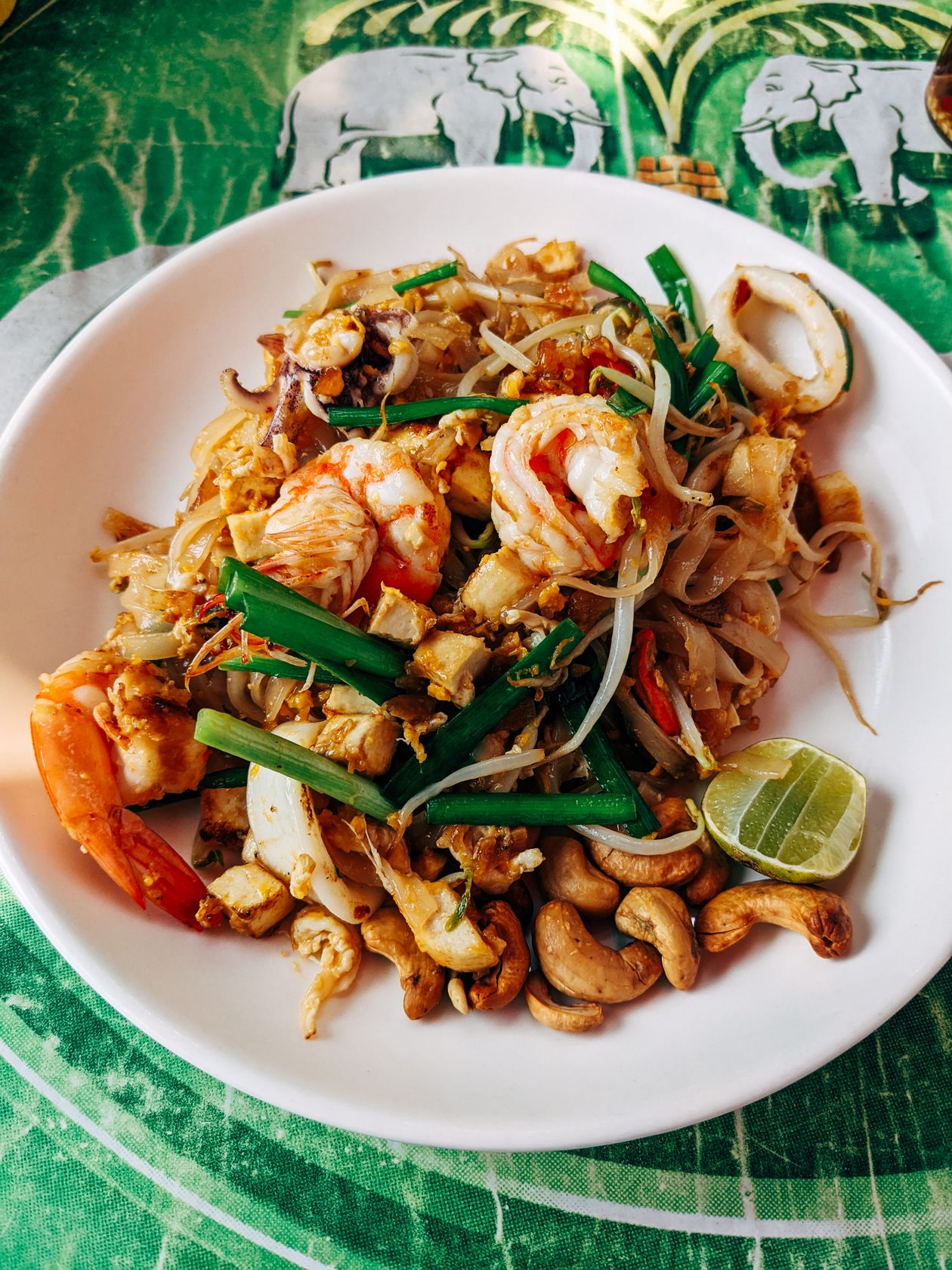
The basil, and the name
Thai basil is not Italian basil. Its leaves are narrower, its stems can run purple, and its flavor carries anise and spice where Italian basil is sweet and soft. In drunken noodles and in pad kra pao, the famous minced meat and basil stir-fry served over rice with a fried egg, Thai basil is not a garnish but a headline ingredient, added by the handful. It wilts in seconds and gives up its perfume to the hot sauce, which is why it goes in last and why dried basil is no substitute at all.
As for the name drunken noodles, the honest answer is that nobody knows for certain, and the stories are better than most certainties. The common versions: the dish is spicy enough to require a cold drink beside it, it was invented as a late-night dish to go with drinks, or a cook made it from whatever was in the kitchen after a long evening. What is certain is that the dish contains no alcohol. The noodles are innocent; only their reputation is drunk.
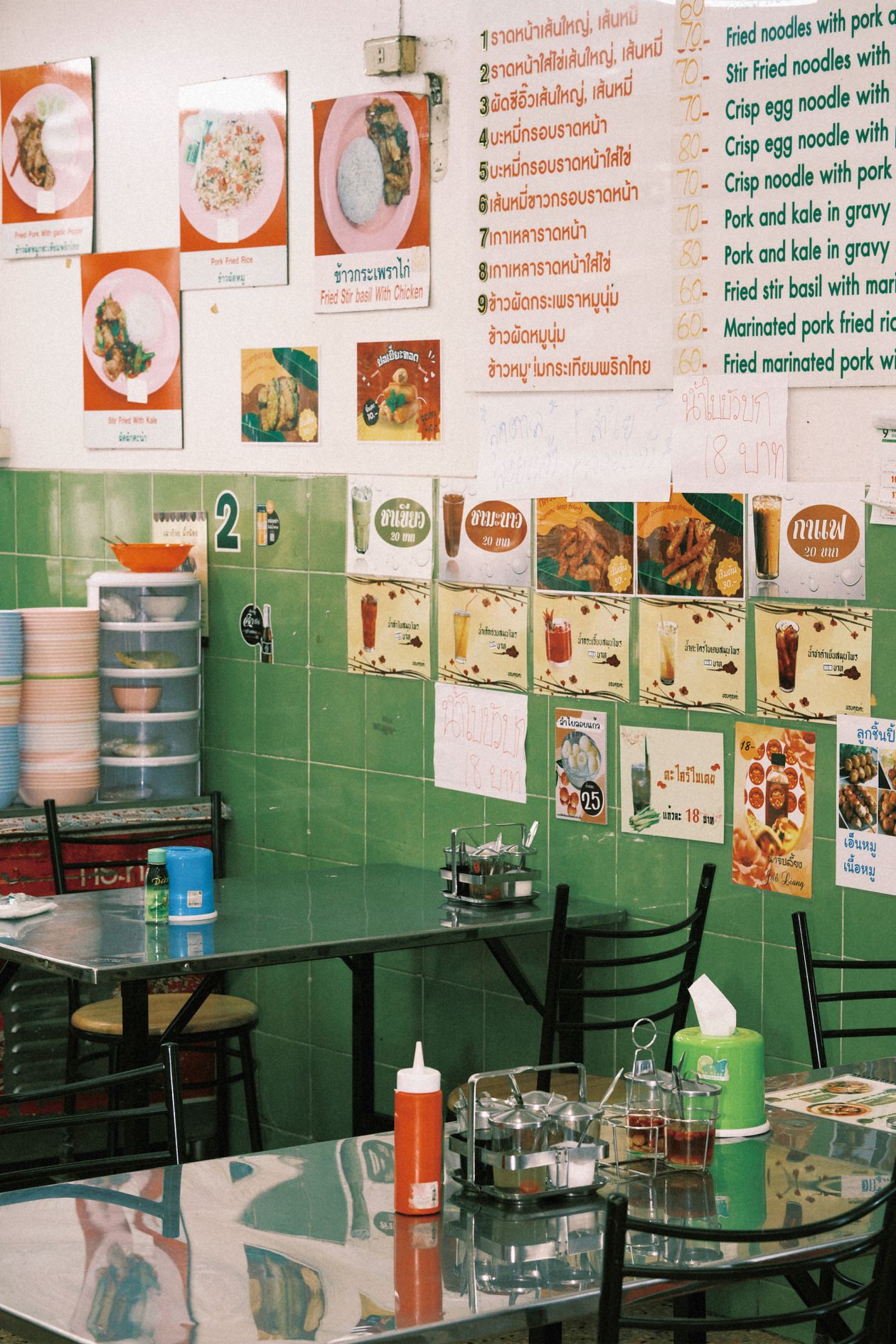
Ordering stir-fries well
Three habits improve any stir-fry order. First, pick your protein by how it takes char: chicken, beef, and tofu all suit drunken noodles, while shrimp cooks so fast it can toughen if the kitchen is slammed, worth knowing at peak hours. Second, order heat honestly, because stir-fry heat arrives raw and immediate, with no coconut milk to cushion it. Third, if the menu offers the basil dish over rice with a fried egg, that combination, crispy-edged egg, rich yolk over spicy minced meat and rice, is one of the great working lunches of Thailand, and it converts many people on the spot.
And eat stir-fries first when the table orders across the menu. Curries wait gracefully, soups hold, but a wok dish is a countdown. The table that starts with the noodles and lets the curry sit for two minutes has understood the whole cuisine's timing.
The fried egg, considered
It is worth pausing on the fried egg that crowns a plate of pad kra pao, because it is a small essay in Thai cooking values. The egg is fried in hot oil until its edges go lacy and crisp while the yolk stays runny, a texture Western kitchens rarely aim for. Broken over the spicy basil mince and rice, the yolk becomes a sauce that cools the chili, enriches the rice, and ties the plate together. Skipping it makes the dish leaner and hotter and simpler; ordering it makes the dish complete. Many Thai diners judge a kitchen by this egg alone, and a restaurant in Albemarle that fries it with crisp edges and a soft center is a restaurant paying attention to details most menus never mention.
Common questions
Do drunken noodles contain alcohol?
No. The name's origin is disputed, with stories about late-night cooking and needing a drink for the heat, but the dish itself has no alcohol.
What is the difference between Thai basil and regular basil?
Thai basil has a distinct anise and spice flavor and sturdier leaves that stand up to wok heat. Italian basil is sweeter and softer, and tastes wrong in its place.
What protein is best in drunken noodles?
Chicken and beef are the most forgiving and traditional choices. Tofu works well; shrimp is excellent but can overcook quickly at busy times.
Photos in this guide are representative stock images.
← All guides from Thai Spice← Back to Thai Spice