Pad Thai is the dish most Americans meet first, and for many in Albemarle it is the standing order at Thai Spice. It looks simple: noodles, egg, some peanuts, a lime wedge. Underneath that simplicity is one of the most carefully balanced dishes in Thai cooking, built on a sauce that has to hit sour, sweet, and salty in the right order, and a wok technique that gives the cook about three minutes to get everything right.
Knowing the anatomy improves the eating. You will know why one version sings and another tastes like sweet ketchup noodles, a failure mode common enough in America that it is worth naming.
The build, in wok order
- Soak the noodles. Flat rice noodles soak in warm water until pliable but still firm. They finish cooking in the wok; boiled noodles turn to mush.
- Sear the protein. Shrimp, chicken, or tofu cooks first over high heat and comes out, so it does not overcook while the noodles work.
- Scramble the egg. Egg goes into the hot wok and is scrambled in ribbons, either mixed through or folded over the finished noodles.
- Noodles meet sauce. Soaked noodles and the tamarind-based sauce go in together, tossing until the noodles absorb the sauce and turn glossy.
- Bean sprouts and chives. A handful goes in at the very end, cooked ten seconds, so they stay crisp against the soft noodles.
- Garnish at the plate. Crushed peanuts, a lime wedge, extra sprouts, and chili flakes arrive on top or alongside, to be mixed in by the eater.
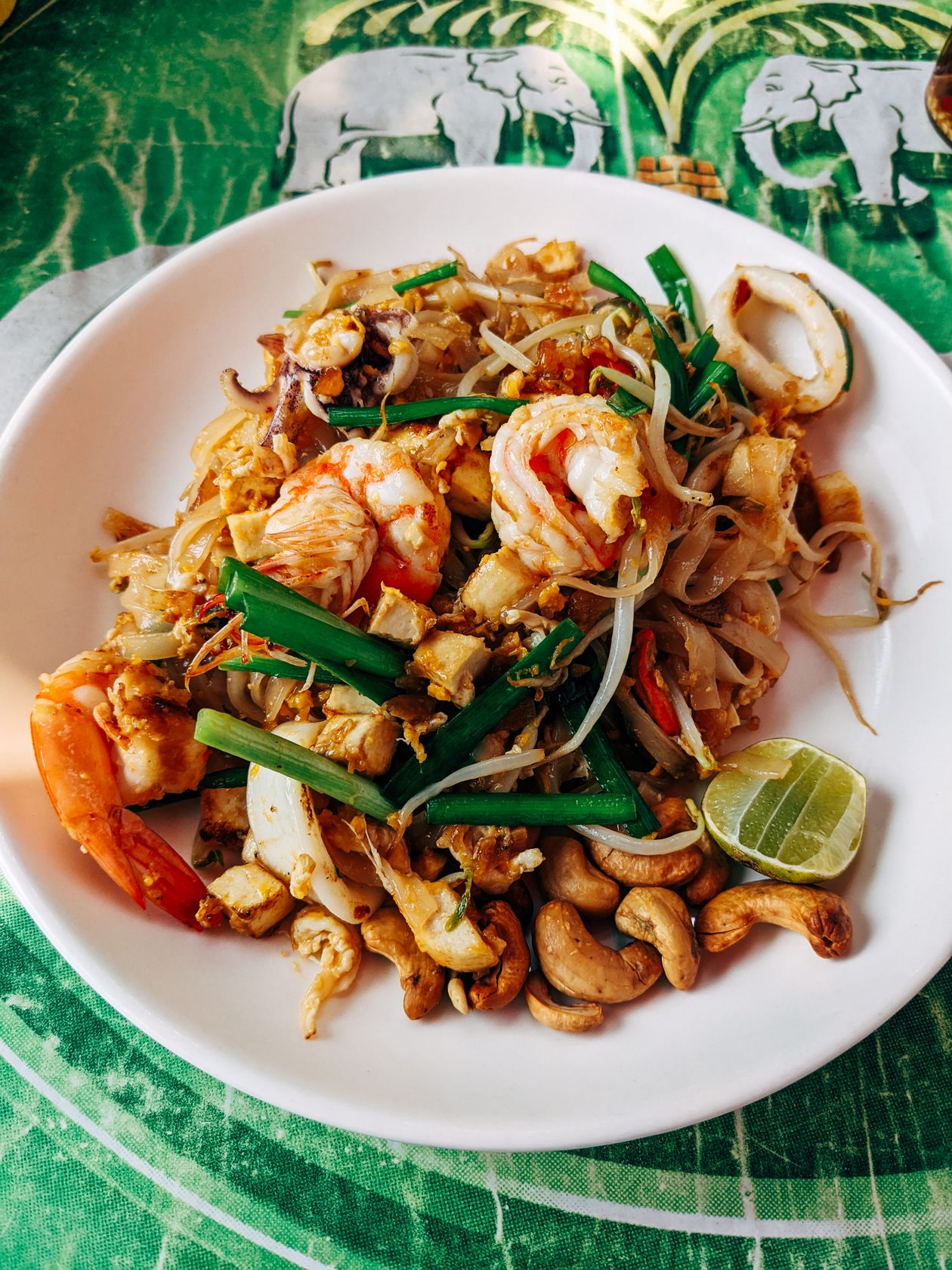
The steps explain the dish's texture, which is its real signature. Pad Thai should be a contrast machine: tender noodles, firm shrimp, crisp sprouts, crunchy peanut, and the chew of egg in every few bites. When everything in the bowl has the same softness, the dish goes flat no matter how good the sauce is. Speed is what protects the contrasts, which is why pad Thai is a wok cook's dish and not a simmering one.
Tamarind is the whole point
The sauce is where versions divide. A proper pad Thai sauce is built on tamarind, the sour fruit pulp that gives the dish its tang, balanced with palm sugar and fish sauce. The flavor should arrive sour first, then sweet, with salt underneath. In many American kitchens, past and present, ketchup or extra sugar has stood in for tamarind, producing the candy-sweet, faintly tomato version that disappoints people who have had the real balance. Tamarind is not exotic anymore; it is a grocery item. A restaurant that uses it is making a deliberate choice, and you can taste the difference in the first bite.
Color is a clue. Tamarind-based pad Thai is a warm amber-brown. A bright orange-red plate signals the ketchup route or heavy paprika coloring. Neither is dangerous, but only one is the dish.
Making it yours at the table
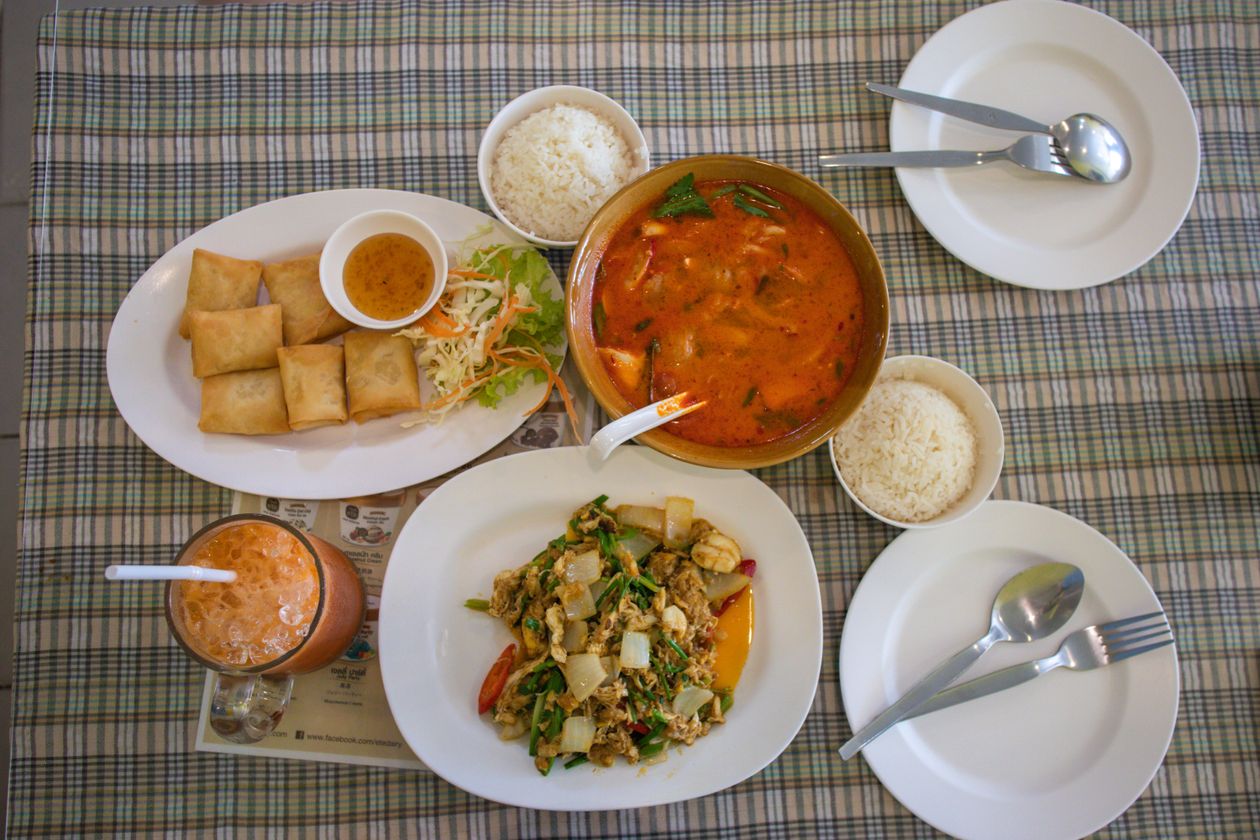
Pad Thai is served unfinished on purpose. The lime wedge is not decoration; squeeze it over everything, because the sauce is built expecting that final hit of acid. The chili flakes and peanuts are seasoning, added to your own tolerance. Mix the garnishes through rather than eating in layers. And know the common variations are all legitimate: pad Thai with shrimp is the classic, chicken is the American favorite, tofu with vegetables suits a meatless order, and a version wrapped entirely in a thin omelet is a Bangkok street style worth trying when a kitchen offers it.
One more note for the Albemarle table: pad Thai is a poor takeout traveler compared to curries, since the noodles keep absorbing sauce and soften in the box. Eaten at the table, hot from the wok, is the dish at its best, which is a fair reason to make it your dine-in order and save the curry for the to-go bag.
Noodles at home, and where home versions fail
Pad Thai is a popular home project, and home versions fail in predictable places. The first is the noodle soak: cooks boil the rice noodles like spaghetti, and they disintegrate in the wok. Warm water and patience is the method. The second is crowding: a home wok or skillet holds one generous portion, and doubling it steams the noodles instead of searing them. The third is sauce timidity. Tamarind tastes aggressively sour from the jar, which scares cooks into under-seasoning, but it mellows against palm sugar and fish sauce in the pan, and a pad Thai that seems balanced in the sauce bowl will taste flat on the noodle. Season past the point of comfort in the bowl, cook in small batches, and the home version closes most of the distance to a restaurant plate.
Common questions
What makes pad Thai sour?
Tamarind, a fruit pulp that forms the base of the sauce along with palm sugar and fish sauce. The sourness should arrive first, balanced by sweetness.
Why are some pad Thais bright orange and sweet?
Some kitchens substitute ketchup or heavy sugar for tamarind. A traditional version is amber-brown and tastes sour before it tastes sweet.
Should I mix in the peanuts and lime?
Yes. The lime and garnishes are part of the seasoning, served on top so you can balance the finished dish at the table.
Photos in this guide are representative stock images.
← All guides from Thai Spice← Back to Thai Spice