The curry section of a Thai menu looks like a paint chart: red, green, yellow, and then the named specialties like massaman and panang. The colors are not decoration and they are not arbitrary. Each names a different curry paste, a different chili blend, and a measurably different eating experience. For diners in Albemarle ordering at Thai Spice or any Thai kitchen, the color code is the single most useful piece of menu literacy after the heat scale itself.
Learn the three main pastes and you can order curry anywhere in the world with confidence, because the code is the same in Bangkok, London, and Stanly County.
The code, in numbers
Rankings come with a caveat: individual kitchens vary, and any curry can be made at any heat level by adjusting the chili. The rankings describe the pastes as traditionally composed. A green curry ordered mild is still gentler than a red ordered Thai hot. The color tells you the flavor family and the default setting, not an unchangeable fate.
The three pastes, tasted
Green curry paste is made from fresh green chilies, which gives it a bright, sharp heat and an herbal edge from lemongrass, lime leaf, and Thai basil. Sweetness from coconut milk is part of its traditional balance, so a good green curry tastes hot, sweet, and fragrant in turns. It pairs classically with chicken and with Thai eggplants. Red curry paste uses dried red chilies, which read deeper and rounder, less sharp than green and more broadly warm. It is the versatile middle, at home with beef, chicken, duck, or tofu, and it is the paste most kitchens also use as a base for panang-style curries.
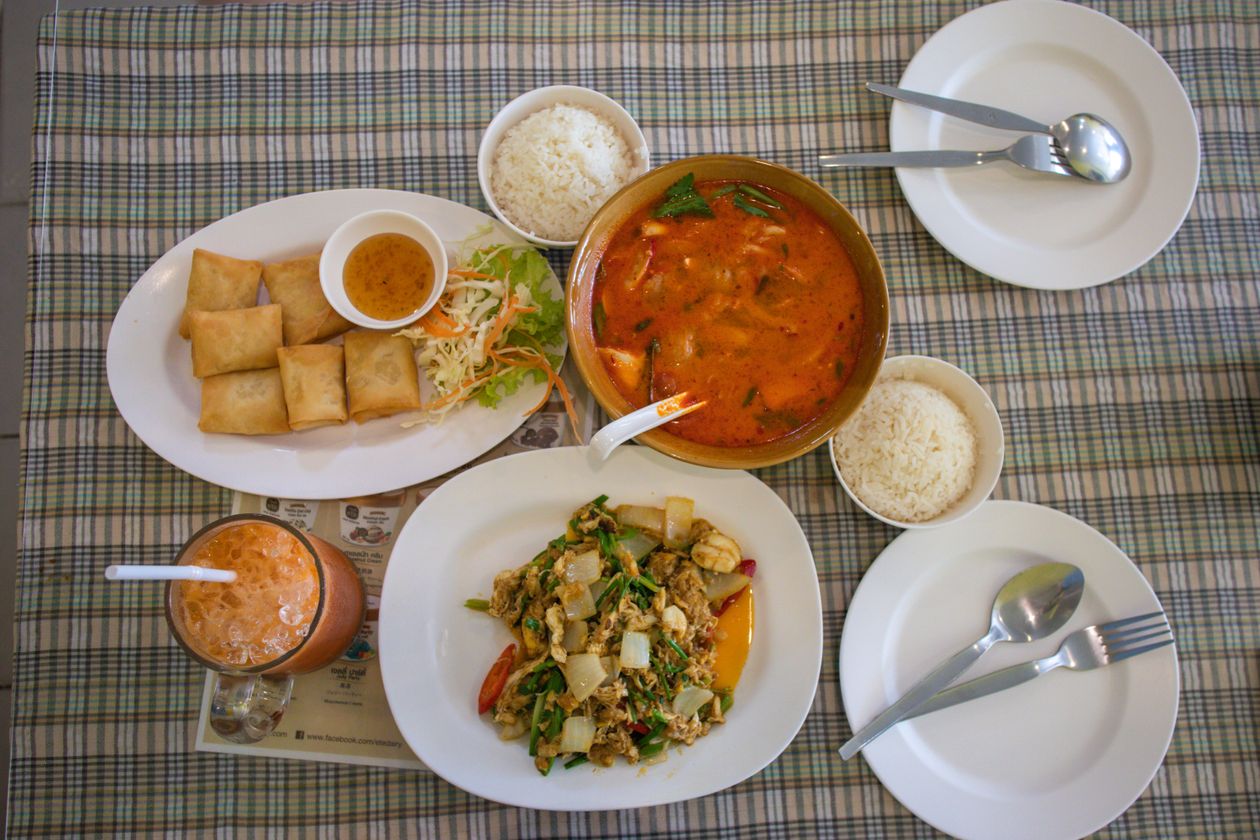
Yellow curry is the outlier: milder, golden with turmeric, and carrying warm spices like cumin and coriander that point toward Indian influence. It is traditionally served with chicken and potatoes, and its gentle, almost stew-like character makes it the standard recommendation for a first curry or for a table that includes kids. If green is a shout and red is a conversation, yellow is a story told at normal volume.
The named specialties worth knowing
Massaman is a rich, mild curry of Persian-influenced spices, cinnamon, cardamom, and peanuts, usually with beef and potatoes; it is regularly named among the world's favorite dishes and it is the least spicy thing on most curry menus. Panang is a thicker, richer red curry variant with ground peanuts and less liquid, served almost as a sauce over the protein. Jungle curry is the warning label: a country-style curry with no coconut milk, so its heat arrives with nothing to soften it, beloved in Thailand and genuinely fierce.
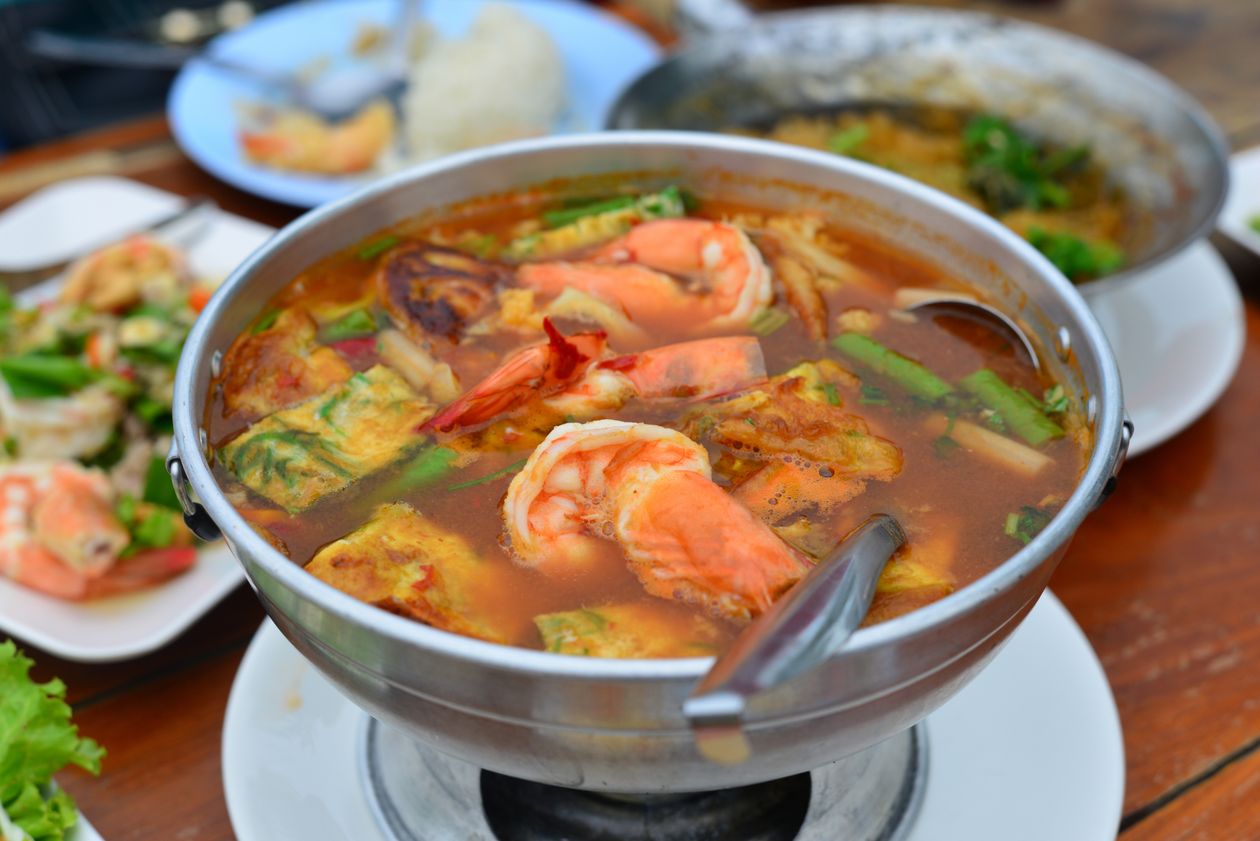
Choosing for a first order is easy with the code in hand. Heat-shy goes yellow or massaman. The curious middle goes red. The heat seeker goes green, honestly leveled. And everyone gets rice, because curry without rice is sauce without a purpose.
Protein changes the curry more than the color does
One more piece of ordering craft: the same paste behaves differently with different proteins, and regulars choose the pairing, not just the color. Green curry loves chicken and seafood, because its sharp heat and herbal edge cut through mild flesh. Red curry is the natural partner for beef and duck, standing up to their richness without being buried by it. Yellow curry's warmth flatters chicken and potato, its classic pairing, and it is gentle enough to let tofu keep its delicacy. Shrimp in any curry should go in late and come out promptly in a good kitchen, because a curry that simmers shrimp for twenty minutes has traded texture for convenience. Ask which pairing the kitchen recommends if you are torn; it is a question Thai cooks enjoy, because the answer shows the menu was designed rather than merely listed.
Common questions
Which Thai curry is the hottest?
Green is traditionally the hottest of the three main curries, made with fresh green chilies. Any curry can be adjusted, so the level you order still matters most.
Which curry should a beginner order?
Yellow curry or massaman. Both are mild, rich, and forgiving, and they show the form without testing your heat tolerance.
What is panang curry?
A thicker, richer relative of red curry with ground peanuts and less broth, served more like a sauce over the meat than a soup-like curry.
Photos in this guide are representative stock images.
← All guides from Thai Spice← Back to Thai Spice