Nearly every Thai menu in America opens its soup section with the same two names, tom yum and tom kha, and nearly every first-time diner in Albemarle has paused over them. They sound alike, they share most of their aromatics, and the menu descriptions often differ by only a few words. In the bowl, they are opposites: one clear and piercing, one creamy and soft. Choosing between them is really choosing what kind of meal you are about to have.
At Thai Spice, the two soups sit side by side as they do everywhere, so this is the comparison worth memorizing once and using forever.
Side by side
| Tom yum | Tom kha | |
|---|---|---|
| Broth | Clear, seasoned stock | Coconut milk enriched stock |
| Defining herb | Lemongrass, with lime leaf and galangal | Galangal above all; the name kha means galangal |
| Sour note | Lime juice, added at the end | Lime juice too, but softened by the coconut milk |
| Heat | Direct and bright; chili up front | Present but cushioned; warmth more than bite |
| Classic protein | Shrimp, as tom yum goong | Chicken, as tom kha gai |
| Best role | A wake-up first course before rich mains | A comfort course; can carry a light meal with rice |
The table hides one subtlety worth knowing. Both soups are built on the same aromatic trio, lemongrass, galangal, and makrut lime leaf, which together produce the unmistakable Thai soup flavor. Galangal looks like ginger's pale cousin and is sometimes substituted with ginger in home kitchens, but the flavor is different: sharper, more citrusy, less warm. A kitchen that uses real galangal is telling you something about its standards.
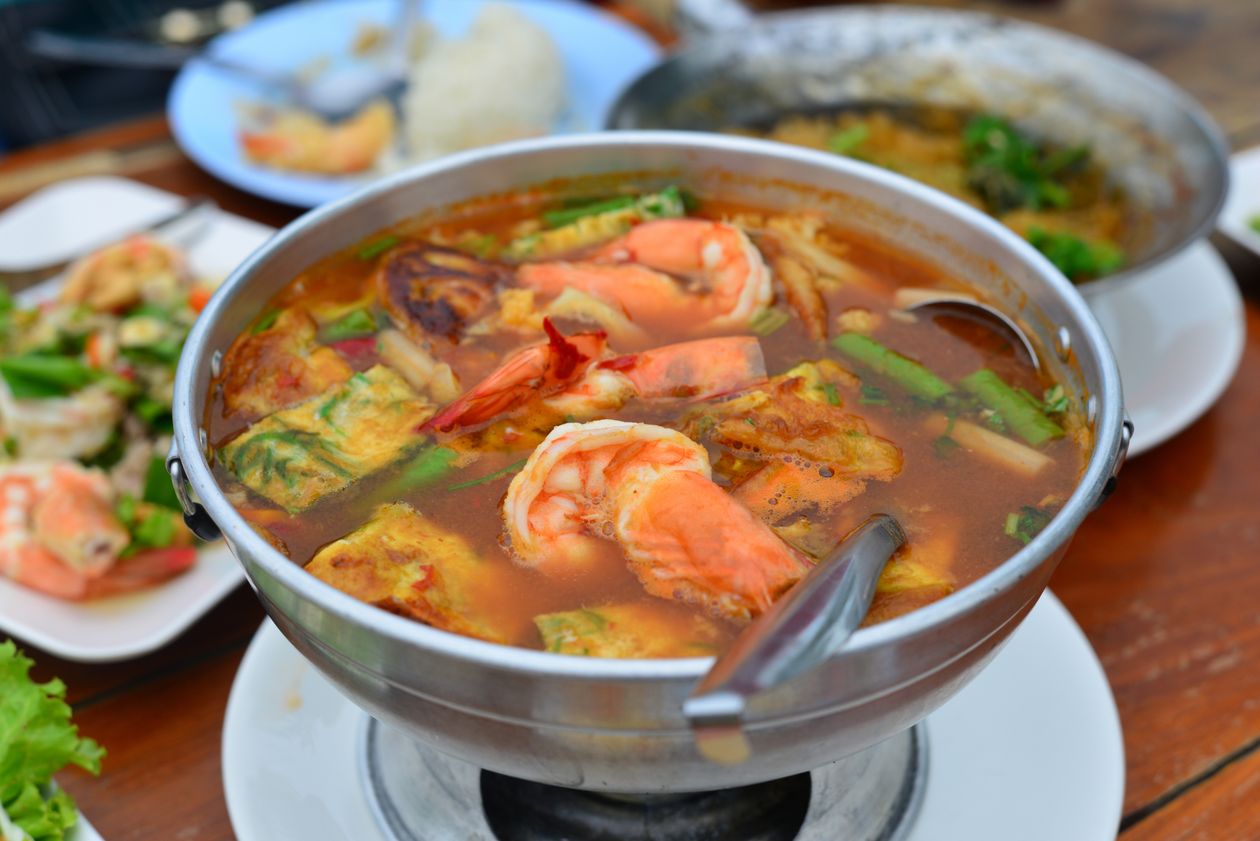
How each one eats
Tom yum is a bracing soup. The first spoonful should be sour first, then hot, then salty, in quick succession, with the lemongrass perfume over all of it. It is a soup that wakes up an appetite, which is why it works best in a small cup before curries and stir-fries. It is also the more revealing soup to order when judging a new Thai restaurant, because a clear broth has nowhere to hide: weak seasoning, old lime juice, or a heavy hand with sugar all show immediately.
Tom kha is the bowl people order when they want to be comforted. The coconut milk rounds every edge, the galangal comes through as a gentle fragrance, and chicken and mushrooms make it substantial enough that a bowl with a side of rice is dinner. It is often the soup that converts people who think they do not like Thai food, precisely because its flavors are soft-spoken. Neither soup is better. They are different tools, and regulars order by mood the way they choose between coffee and tea.
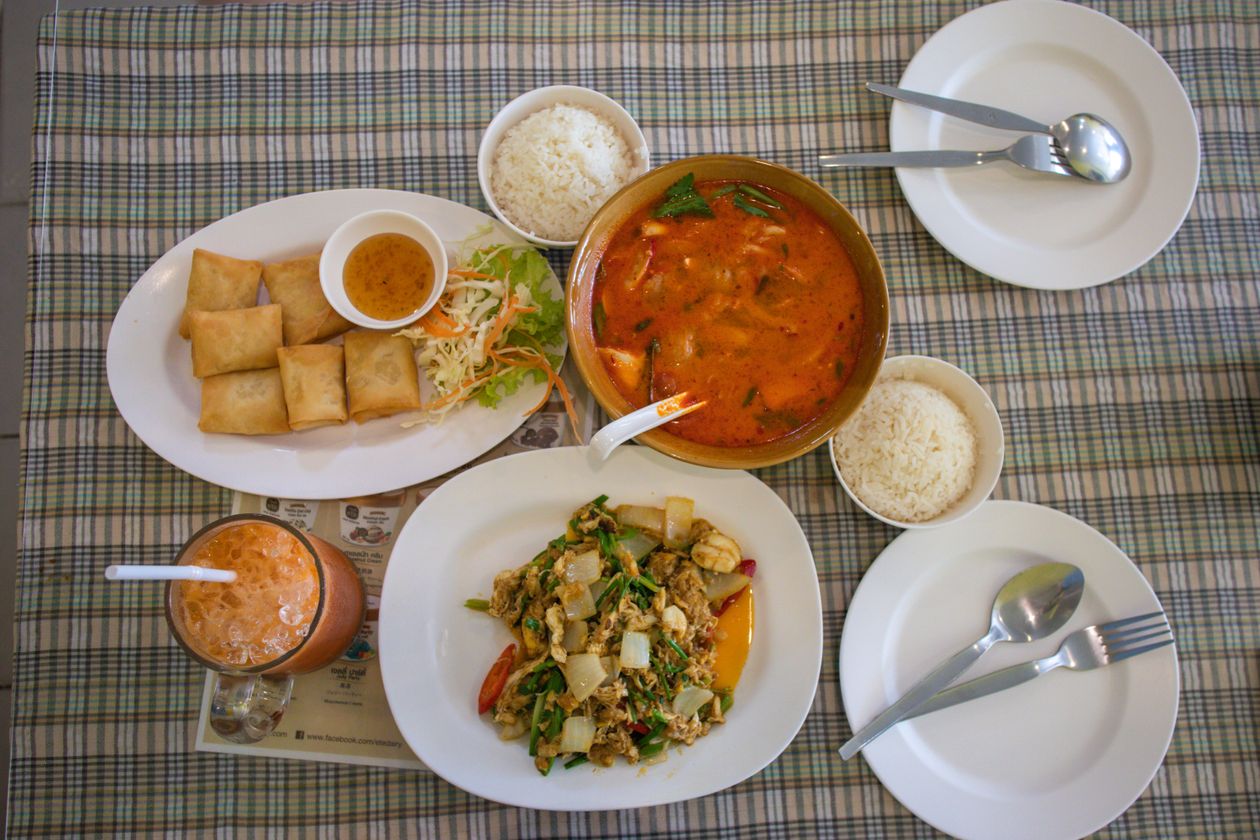
Ordering and eating notes
A few practical points. The lemongrass stalks, galangal slices, and lime leaves in your bowl are aromatics, not ingredients to eat; diners in Thailand leave them in the bowl, and you should too. If you order a soup as a main course, ask for the larger bowl, since the standard serving is a starter cup. And if a menu offers a seafood combination version of tom yum, it is usually the kitchen's showpiece, worth ordering when the table wants one bowl to share and argue over.
Heat is adjustable in both soups, and tom yum in particular benefits from being ordered at an honest level. Its clarity shows heat cleanly, so a medium tom yum is a true medium test of your tolerance, useful calibration for the rest of the menu.
Which one travels, which one teaches
If you are ordering takeout, tom kha is the better traveler. Coconut milk broth reheats gently and loses little on the drive home, while tom yum's lime brightness fades within the hour and is never quite the same reheated. Order tom yum at the table and tom kha for the couch, and both soups will show you their best side. If you are judging a Thai kitchen for the first time, though, reverse the logic and order the tom yum in the restaurant. Its clarity is a report card: bright lime added at the end, aromatics fresh enough to perfume the bowl, heat placed precisely. A kitchen that gets tom yum right will get nearly everything else right too, and one that serves it dull and sweet has told you something worth knowing before you order the rest of the menu.
Common questions
Which soup is less spicy, tom yum or tom kha?
Tom kha, generally. The coconut milk cushions the chili heat, while tom yum's clear broth delivers it directly. Both can be ordered milder.
Are the lemongrass and galangal in the bowl edible?
They are aromatics meant to flavor the broth, not to be eaten. Leave the tough pieces in the bowl as Thai diners do.
Can a bowl of tom kha be a meal?
Yes. With chicken, mushrooms, and a side of jasmine rice, the larger bowl of tom kha makes a complete, satisfying light dinner.
Photos in this guide are representative stock images.
← All guides from Thai Spice← Back to Thai Spice